


Vegan Omega-3 Australia | 500mg DHA 300mg EPA Marine Algae
Free Delivery over $99 in Australia. Express Post also available. Order by 11.30am Sydney time for same-day dispatch (M-F)
Plant-Based Omega-3 · 90 Softgels · 45 Servings
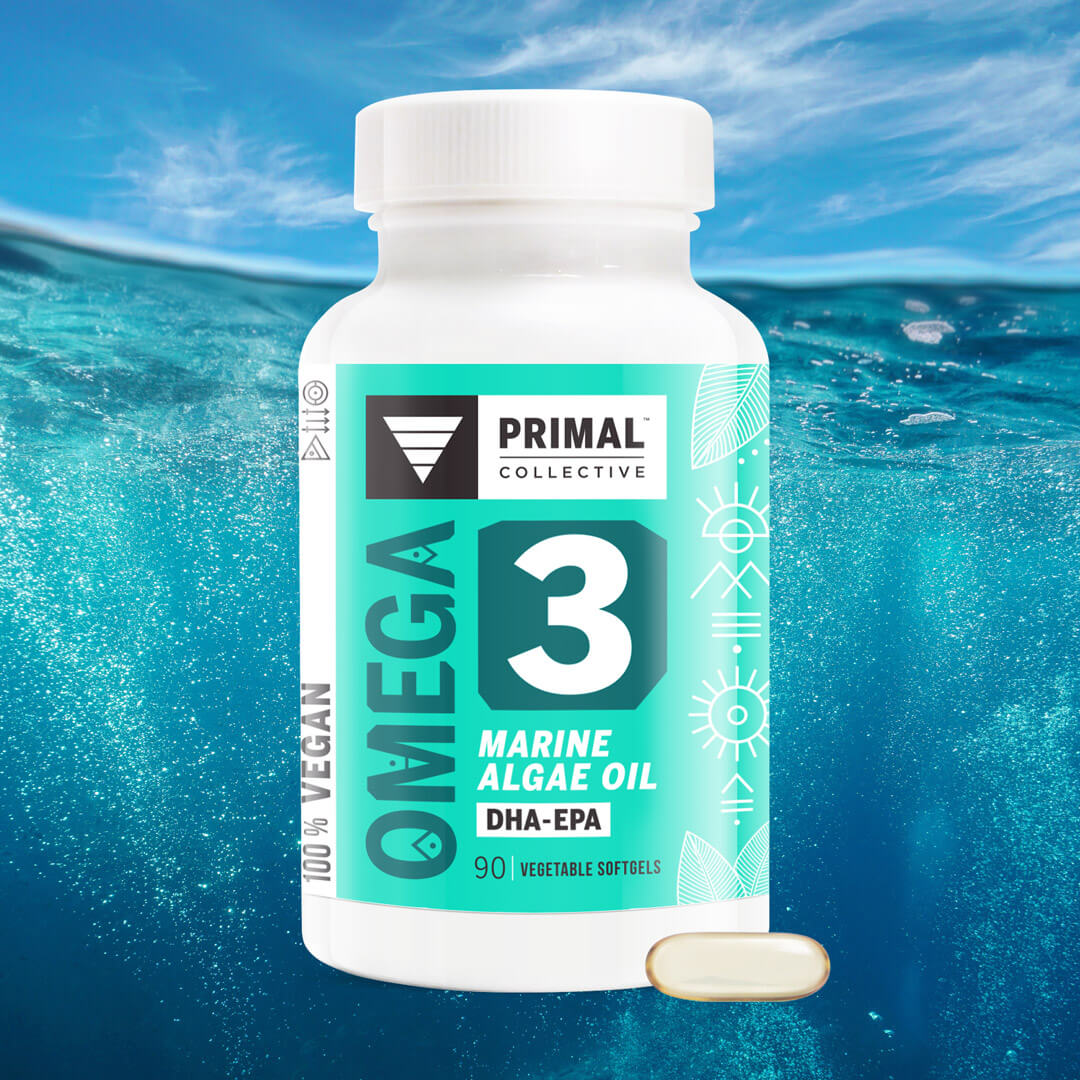
Primal Collective™ Vegan Omega-3 Softgels
A plant-based omega-3 oil made from marine algae. Delivers 500mg DHA + 300mg EPA per 2-softgel serving, plus 200 IU Vitamin D. 100% vegan, gluten-free, made without fish or krill.
Hexane-free distillation · Per-batch lab tested in Australia · Mercury not detected · TOTOX <3.5.
Key Points
- Plant-based DHA and EPA direct from marine algae — the original source of these fatty acids in the marine food chain (fish and krill accumulate DHA/EPA by eating algae)
- 800mg combined EPA+DHA per 2-softgel serve
- Plus Vitamin D at 100% NRV per serve (200 IU / 5mcg)
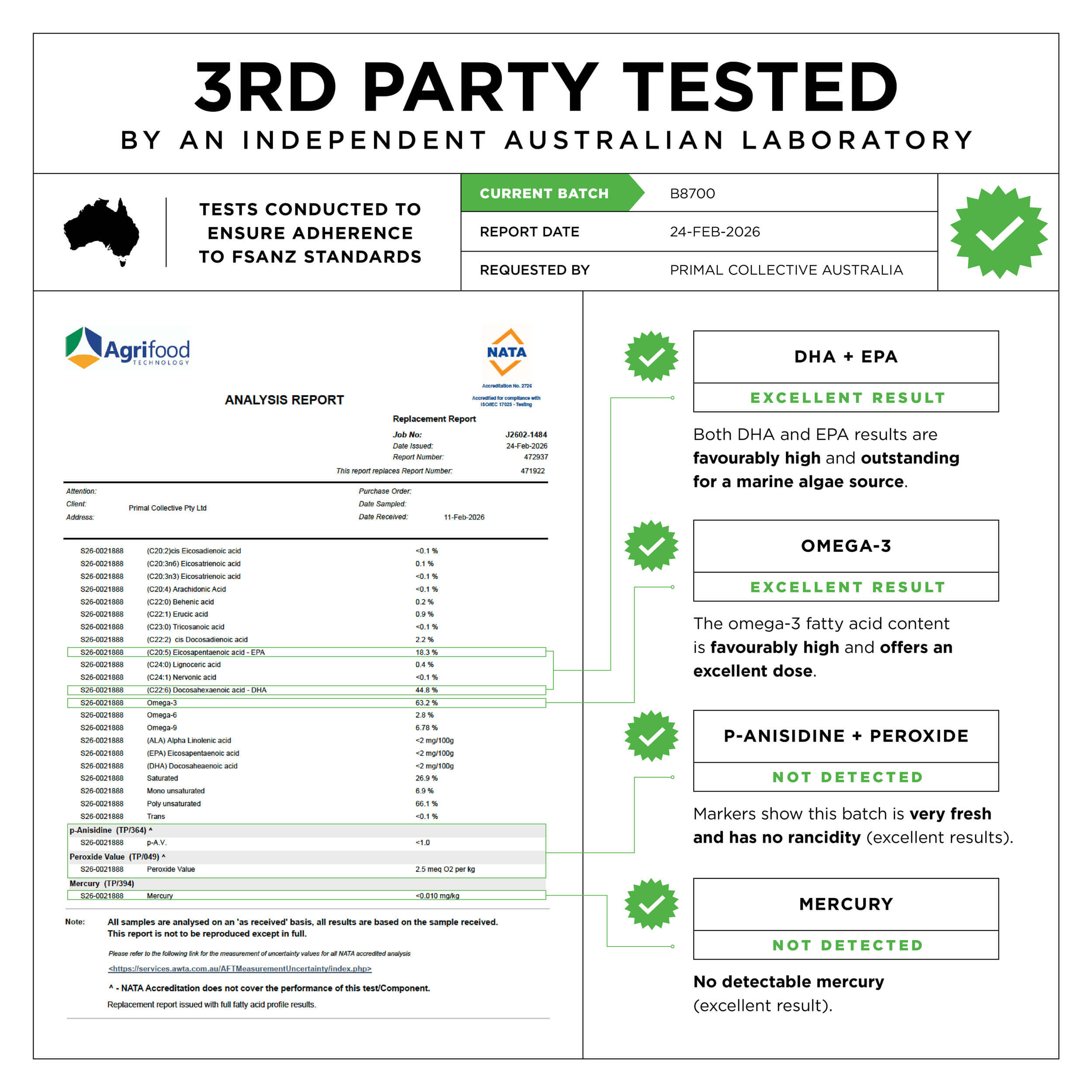
- Per-batch tested in Australia — verified for omega-3 content, oxidation (TOTOX), and heavy metals. Recent batch test: February 2026 results
- Hexane-free distillation process
- Mercury not detected in batch testing (limit of detection 0.010 mg/kg)
- Sustainably sourced — algae grown in a contained aqua farm, not harvested from wild oceans
- 100% vegan capsule shell (modified starch + vegan glycerol + carrageenan), no gelatin
Why Marine Algae
Marine algae is the original source of DHA and EPA in the ocean food chain. Fish, krill, and other marine animals don’t produce these fatty acids themselves — they accumulate them by eating algae (or by eating other animals that ate algae).
Going direct to the algal source has practical advantages:
- No fish, no krill, no marine animal involvement — suitable for vegan, vegetarian, and plant-based diets
- Lower environmental contaminant accumulation — pollutants and heavy metals concentrate as they move up the food chain. Algae sit at the bottom of the food chain, before this accumulation occurs.
- Closed-system aqua farming — the algae is grown in a controlled facility, isolated from wild-ocean variables (pollutants, microplastics, seasonal water quality changes)
- Sustainability — doesn’t draw from wild fish or krill populations
The chemical composition of algal DHA/EPA is the same as the DHA/EPA from fish. The molecules are identical; only the production pathway differs.
Per-Batch Quality Testing
Every batch is lab tested in Australia. The most recent batch test (February 2026, full PDF) shows the following:
| Measure | Feb 2026 Batch | Notes |
|---|---|---|
| DHA per serving | 663mg | Exceeds 500mg label minimum |
| EPA per serving | 271mg | Within range of 300mg label |
| p-Anisidine Value (p.AV) | <1.0 | Secondary oxidation indicator |
| Peroxide Value | 2.5 meq O₂/kg | Primary oxidation indicator |
| TOTOX (total oxidation) | <3.5 | Industry-recommended TOTOX is ≤26; quality-aware products target <10 |
| Mercury | Not detected | Limit of detection: 0.010 mg/kg |
TOTOX (total oxidation) is the standard industry measure for omega-3 supplement freshness. The Global Organization for EPA and DHA, the omega-3 supplement industry’s trade body, recommends all omega-3 supplements have a TOTOX ≤26. Independent testing has found many marketed products exceed this. Quality-oriented products typically target TOTOX <10. This product’s February 2026 batch tested at <3.5.
Product Specifications
| Format | Vegetarian softgels (no gelatin) |
| Capsules per Bottle | 90 |
| Serving Size | 2 capsules |
| Servings per Bottle | 45 |
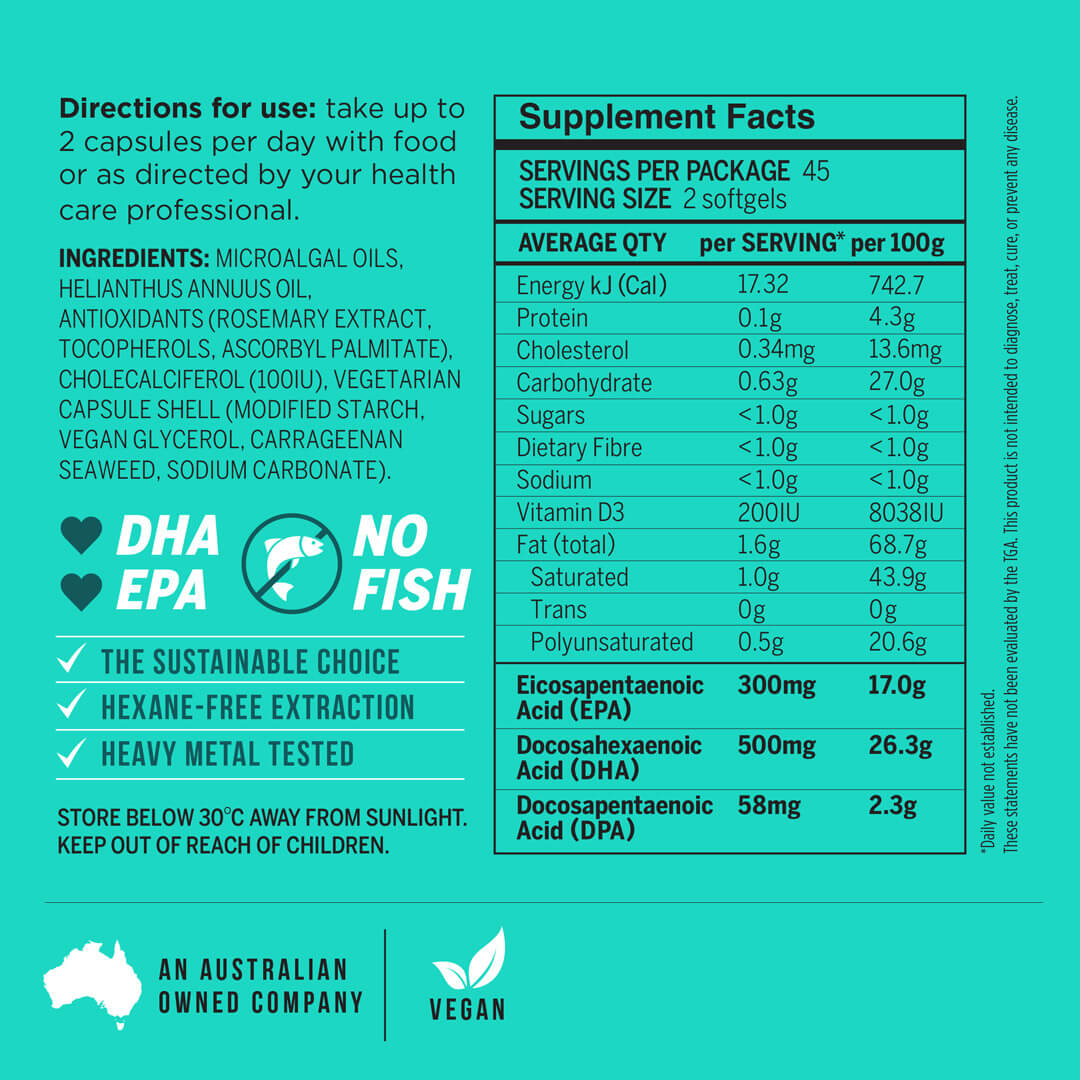
| Per Serving (label) | 500mg DHA · 300mg EPA · 200 IU (5mcg) Vitamin D |
| Source | Marine microalgae oil (grown in contained aqua farm) |
| Ingredients | Microalgal oils, helianthus annuus oil (sunflower), antioxidants (rosemary extract, tocopherols [Vit E], ascorbyl palmitate [Vit C]), Vitamin D. Capsule shell: modified starch, vegan glycerol, carrageenan (seaweed), sodium carbonate. |
| Free From | Fish · Krill · Animal products · Gluten · Hexane |
| Dietary Suitability | Vegan · Gluten-free |
| Testing | Every batch lab tested in Australia (EPA/DHA content, oxidation, heavy metals) |
| Storage | Store in a cool, dry place. Keep tightly closed after opening. |
Directions for Use
Take 2 softgels daily with food.
Refer to the bottle label for full directions. Do not exceed the recommended daily intake.
ALA vs DHA/EPA
A common question for plant-based eaters: why supplement DHA/EPA when foods like flaxseed, chia, walnuts, and hemp seeds already contain omega-3?
The answer is the form of omega-3 they contain. Plant foods like flaxseed, chia, walnuts, and hemp provide ALA (alpha-linolenic acid). The human body can convert ALA into DHA and EPA, but the conversion is inefficient — published research finds conversion rates in human trials ranging from 0–9%.
This means that getting a meaningful daily DHA/EPA intake from plant ALA sources alone would require very large quantities of those foods. Direct DHA/EPA from algal or marine sources sidesteps the conversion entirely. Marine plants (algae) are the exception — they provide DHA and EPA directly, in the same forms found in fish.
Good to Know
Why is there carrageenan in the capsule shell?
Carrageenan (a seaweed extract) is used as a vegan alternative to gelatin to form the softgel capsule. The amount used is small. The carrageenan in this product is the food-grade material that has been approved for food use by FSANZ and EFSA. (Note: there’s a separate substance called “poligeenan” or degraded carrageenan that is sometimes confused with carrageenan — that’s a different material not permitted in food.)
Is the ascorbyl palmitate from palm oil?
No. Ascorbyl palmitate is Vitamin C in a fat-soluble form. It’s made by combining Vitamin C (ascorbic acid) with palmitic acid — a fatty acid found in many vegetable oils including sunflower (which is the source used here). Despite the “palmit” in the name, no palm oil is involved.
How is the algae grown?
The microalgae used is grown in a contained aqua farm — a closed system rather than wild ocean harvesting. This controls for water quality, nutrient inputs, contaminant exposure, and harvest conditions.
What does the “TOTOX” number on the test results mean?
TOTOX (TOTal OXidation) is a measure of how oxidised an omega-3 oil has become. Omega-3 oils are sensitive to oxidation (going rancid). The TOTOX number combines two underlying oxidation measures (Peroxide Value and p-Anisidine Value) into a single freshness indicator. Lower is fresher. Industry recommendation is ≤26; quality-aware products target <10.
Is there fish in this?
No. No fish, no fish oil, no krill, no marine animal involvement. The DHA and EPA come directly from microalgae. Suitable for fish allergies, vegan, and vegetarian diets.
How does this compare to fish or krill oil?
The DHA and EPA molecules themselves are chemically identical — the body uses them the same way regardless of source. The differences are the source organism (algae vs fish/krill), the production process (closed-system aqua farming vs wild capture), and the molecular form (the algal omega-3 is in triglyceride form like fish oil; krill oil is in phospholipid form).
Important Information
Always read the label and follow the directions for use. Do not exceed the recommended daily intake. Use only if the seal is intact. Keep out of reach of children.
Consult a qualified healthcare practitioner before use if you take prescription medication, are recovering from surgery, are pregnant or breastfeeding, or have any pre-existing medical condition.
Best Sellers
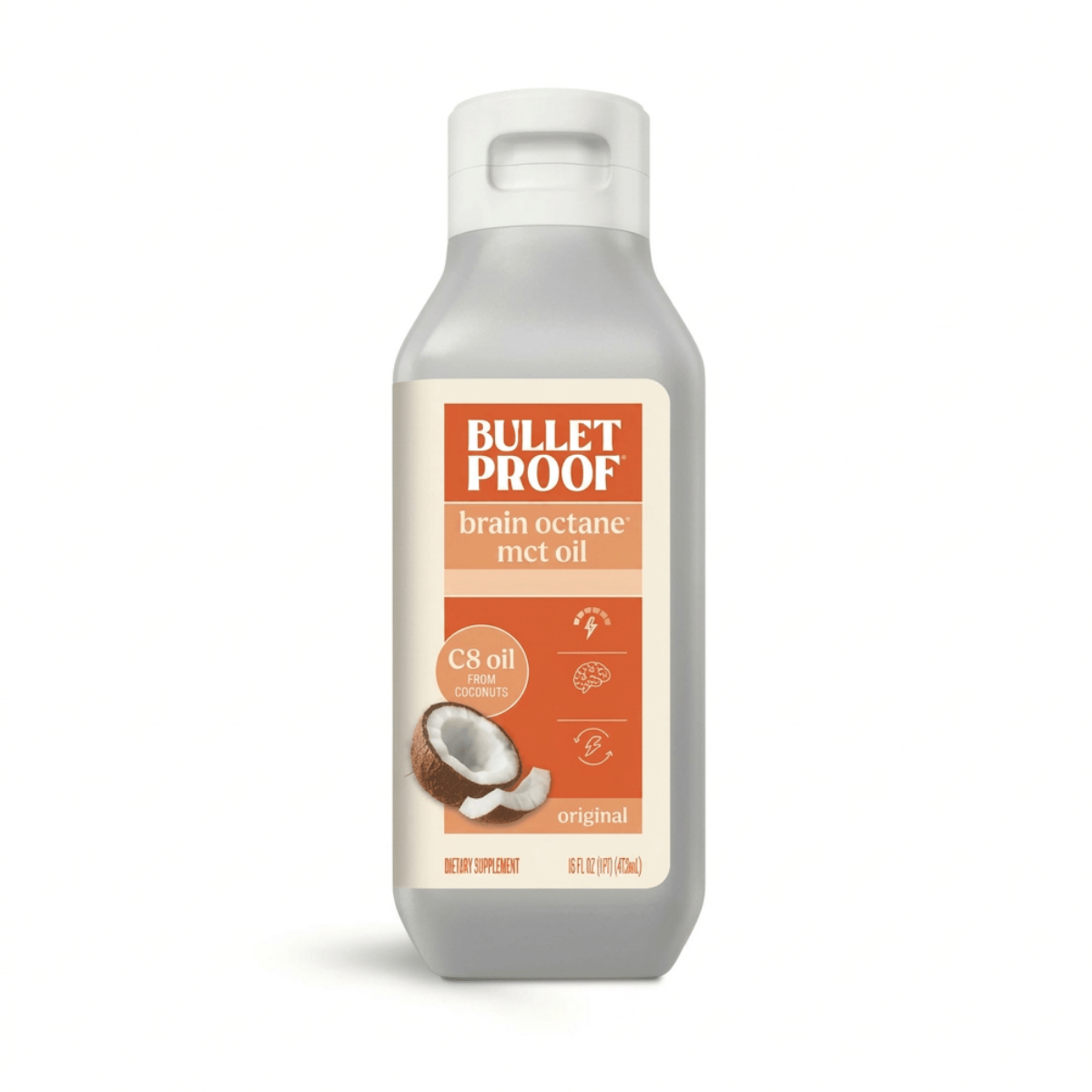
Bulletproof Brain Octane C8 MCT Oil 414mL | Pure C8 Coconut


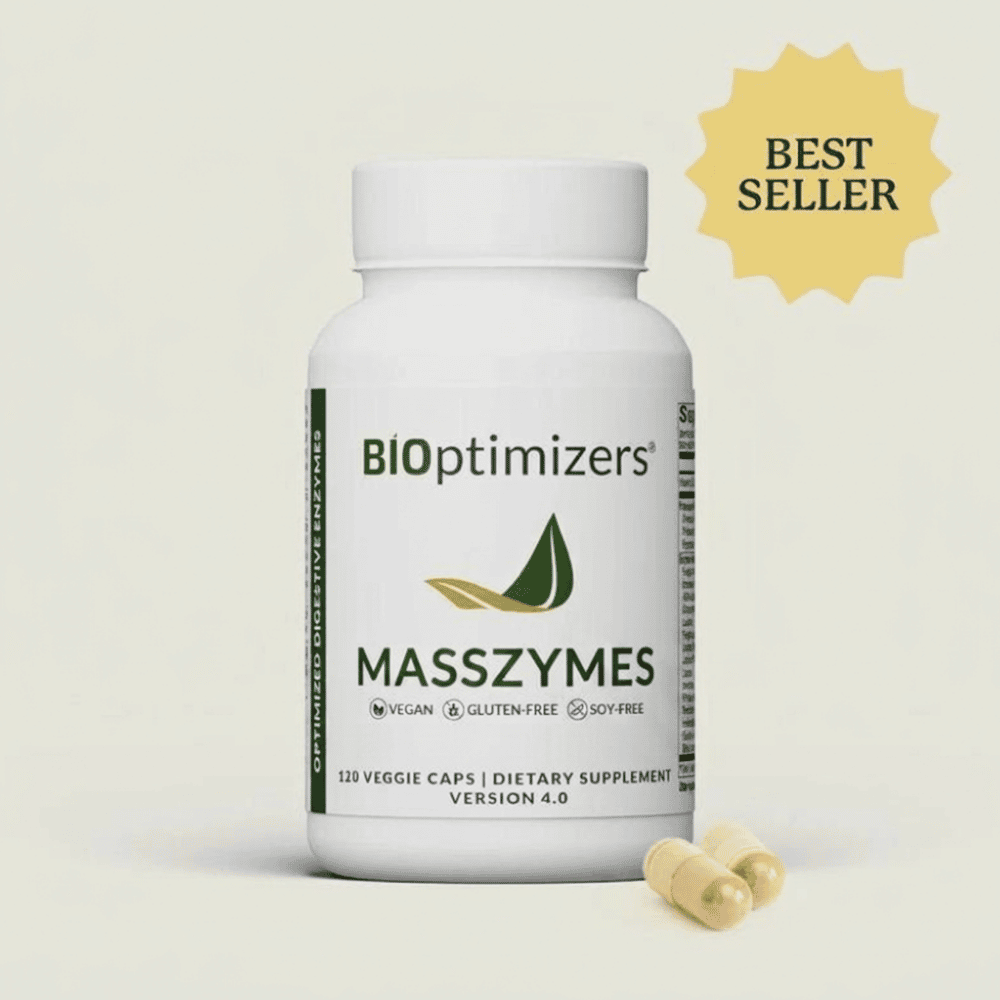
BiOptimizers MassZymes Australia


New Products
Pendulum 3 Strain GLP-1 Probiotic
Bioptimizers Sleep Breakthrough Drink Powder
BiOptimizers MassZymes Australia
KetoneAid KE4 Ketone Ester Drink
PureHMO® Prebiotic Powder Australia | Layer Origin 2'-FL
BIOptimizers Sleep Breakthrough - 60 capsules