

Great Lakes Collagen Peptides Powder Australia | Grass-Fed Bovine
Free Delivery over $99 in Australia. Express Post also available. Order by 11.30am Sydney time for same-day dispatch (M-F)
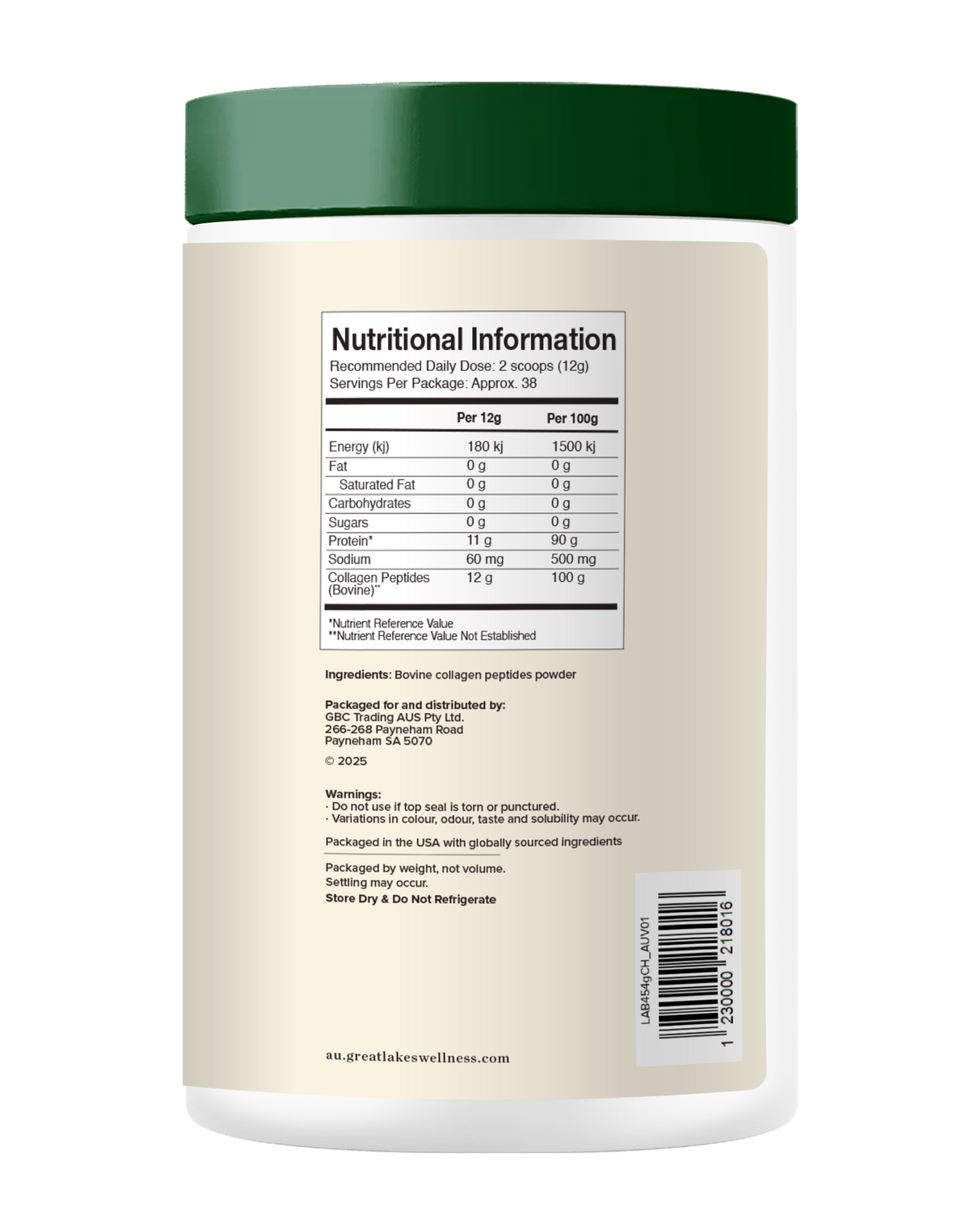
Hydrolysed Bovine Collagen Peptides PoWDER · Types 1 & 3 · 454g (16 oz) tin
Great Lakes Collagen Peptides
Hydrolysed bovine collagen protein sourced from grass-fed cattle in Argentina and Brazil. Provides 11g of protein per 12g serve — high in protein. Hot or cold liquid soluble. Flavourless and odourless. Dissolves without clumping in coffee, smoothies, soups, broths, baking and jellied desserts.
Type 1 and Type 3 collagen. Average molecular weight 5,000 Daltons. Gluten-free. Dairy-free. MSG-free. Contains no added sugars, fillers, additives or artificial preservatives. 454g (16 oz) resealable tin.
Australian Brand Alternative
Primal Collective Grass-Fed Collagen Hydrolysate — $47.95, or as low as $44 each with a 3-pack.

What It Is
Great Lakes Collagen Peptides is a hydrolysed bovine collagen protein powder made exclusively from the hides of grass-fed cattle raised in Argentina and Brazil. The collagen is extracted, then enzymatically hydrolysed — broken down into smaller peptide chains — to make it readily soluble in both hot and cold liquids.
The average molecular weight of the resulting peptides is approximately 5,000 Daltons (manufacturer-stated). Lower molecular weight peptides dissolve more readily and produce no gelling behaviour when added to liquids — unlike unhydrolysed gelatin, which sets into a gel.
High in Protein
At 11g of protein per 12g serve, Great Lakes Collagen Peptides meets the FSANZ threshold for a "high in protein" food (Standard 1.2.7).
Under the Food Standards Code, protein at this level may be described as:
- Contributing to a growth in muscle mass
- Contributing to the maintenance of muscle mass
- Contributing to the maintenance of normal bones
These claims apply to dietary protein generally and are independent of the protein source — collagen, whey, casein, soy, pea and other protein sources are all eligible when consumed at sufficient quantities as part of a balanced diet.
Collagen Peptides vs Gelatin
Both products come from the same starting material — bovine collagen — but differ in the degree of processing:
| Property | Collagen Peptides (this product) | Gelatin (unhydrolysed) |
|---|---|---|
| Processing | Enzymatically hydrolysed | Partially hydrolysed (thermal) |
| Molecular weight | ~5,000 Daltons | ~50,000–100,000 Daltons |
| Cold liquid solubility | Dissolves in cold liquids | Requires hot liquid to dissolve |
| Gelling behaviour | Does not gel | Forms a firm gel when cooled |
| Best for | Beverages, smoothies, baking | Jellies, marshmallows, panna cotta |
Choose Collagen Peptides if you want to add collagen protein to drinks and recipes without changing the texture. Choose Gelatin if you want the gelling property for desserts and jellies.
Sourcing & Quality
Great Lakes Wellness sources its bovine collagen from grass-fed cattle raised in Argentina and Brazil. The cattle industry in these countries is regulated by their respective Departments of Agriculture and subject to comparable inspection requirements to those in the United States.
Only beef hides are used as the source material for the collagen extraction process. The finished product meets the specifications set forth by the United States Pharmacopoeia / National Formulary (USP 33-NF 28).
Amino Acid Profile
Per 100g of protein (manufacturer-stated). * denotes essential amino acid.
| Amino Acid | g / 100g | Amino Acid | g / 100g |
|---|---|---|---|
| * Histidine | 1.0 | Alanine | 11.0 |
| * Isoleucine | 1.8 | Arginine | 9.3 |
| * Leucine | 3.4 | Aspartic Acid | 6.7 |
| * Lysine | 4.7 | Cystine | 0.1 |
| * Methionine | 1.0 | Glutamic Acid | 11.4 |
| * Phenylalanine | 2.6 | Glycine | 29.0 |
| * Threonine | 2.2 | Hydroxylysine | 1.2 |
| * Tryptophan | 0 | Hydroxyproline | 14.5 |
| Proline | 17.6 | ||
| Serine | 3.8 | ||
| Tyrosine | 1.0 | ||
| Valine | 3.3 |
Bovine collagen is naturally rich in glycine, proline, hydroxyproline and hydroxylysine — the four amino acids that are most characteristic of the collagen protein structure. The amino acid profile of collagen differs from that of complete proteins such as whey or egg, and collagen is not considered a complete protein on its own (it contains no tryptophan).
Product Specifications
| Format | Powder (unflavoured, off-white to pale beige) |
| Net Weight | 454g (16 oz / 1 lb) tin |
| Serves per Tin | ~38 serves (at 12g per serve) |
| Protein per Serve | 11g (high in protein) |
| Ingredients | 100% hydrolysed bovine collagen (Type 1 & Type 3) |
| Source | Grass-fed bovine hides (Argentina, Brazil) |
| Average Molecular Weight | ~5,000 Daltons |
| Solubility | Soluble in hot or cold liquids; does not gel |
| Taste & Smell | Flavourless, odourless |
| Quality Standard | Meets USP 33-NF 28 specifications |
| Dietary Suitability | Paleo · Keto · Low-carb · Dairy-free · Gluten-free |
| Free From | Gluten · Dairy · MSG · Added sugar · Fillers · Additives · Artificial preservatives |
Directions for Use
Standard serve: 1–2 tablespoons per day, mixed into hot or cold liquid.
Cold liquids: Add the powder to a small amount of room temperature liquid first, stir, then add cold liquid and mix completely.
Room temperature liquids: Add directly to juice, water, or your usual drink and stir until dissolved.
Hot liquids: Add the powder to the container first, then add hot liquid and stir until dissolved.
Common uses: Coffee (including Bulletproof Coffee), tea, smoothies, broths, soups, stews, oatmeal, yoghurt, baking recipes, protein bars, and beverages of all kinds.
Storage: Store in a cool, dry place with the lid tightly sealed. Use before the printed best-before date.
Good to Know
Will it change the taste of my drink?
No. The powder is flavourless and odourless. It blends into beverages, broths and recipes without altering the taste.
Will it gel like gelatin?
No. Hydrolysed collagen peptides do not gel because the protein chains have been broken down to a smaller molecular weight than gelatin. If you want a gelling product for desserts or jellies, choose gelatin instead.
Does it contain MSG?
No. Great Lakes Collagen Peptides contains no added MSG (monosodium glutamate). Note that collagen naturally contains glutamic acid as one of its constituent amino acids (~11.4g per 100g protein) — this is a different substance from added MSG and is naturally present in all dietary proteins.
Is it gluten-free?
Yes. Collagen is an animal-derived protein and naturally contains no gluten. Glutens are plant-derived proteins found in wheat, barley and rye.
How long does an opened tin last?
Once opened, the product is good until the printed "Best By" date on the tin. Store in a cool, dry place with the lid tightly sealed.
Is it a complete protein?
No. Collagen is not classified as a complete protein because it contains no tryptophan (an essential amino acid). It can be a useful addition to a varied diet but should not be your sole protein source.
Pairs Well With
- Coffee — collagen peptides mix into hot coffee without changing flavour
- Bulletproof Coffee recipe — pairs with MCT oil and grass-fed butter or ghee
- Smoothies — adds protein without affecting texture or taste
- Soups, broths and stews — dissolves into savoury liquids
- Baking — can be incorporated into protein bars, pancakes, muffins and other recipes
Important Information
This product is a food and should be consumed as part of a varied, balanced diet. It is not a sole source of nutrition. Collagen is not a complete protein and should not replace complete dietary protein sources.
Always read the label and follow the directions for use. Keep out of reach of children. If you are pregnant, breastfeeding, taking prescription medication, or have any medical condition, consult a qualified healthcare practitioner before adding new food products to your diet.
This product is not intended to diagnose, treat, cure or prevent any disease.
Best Sellers
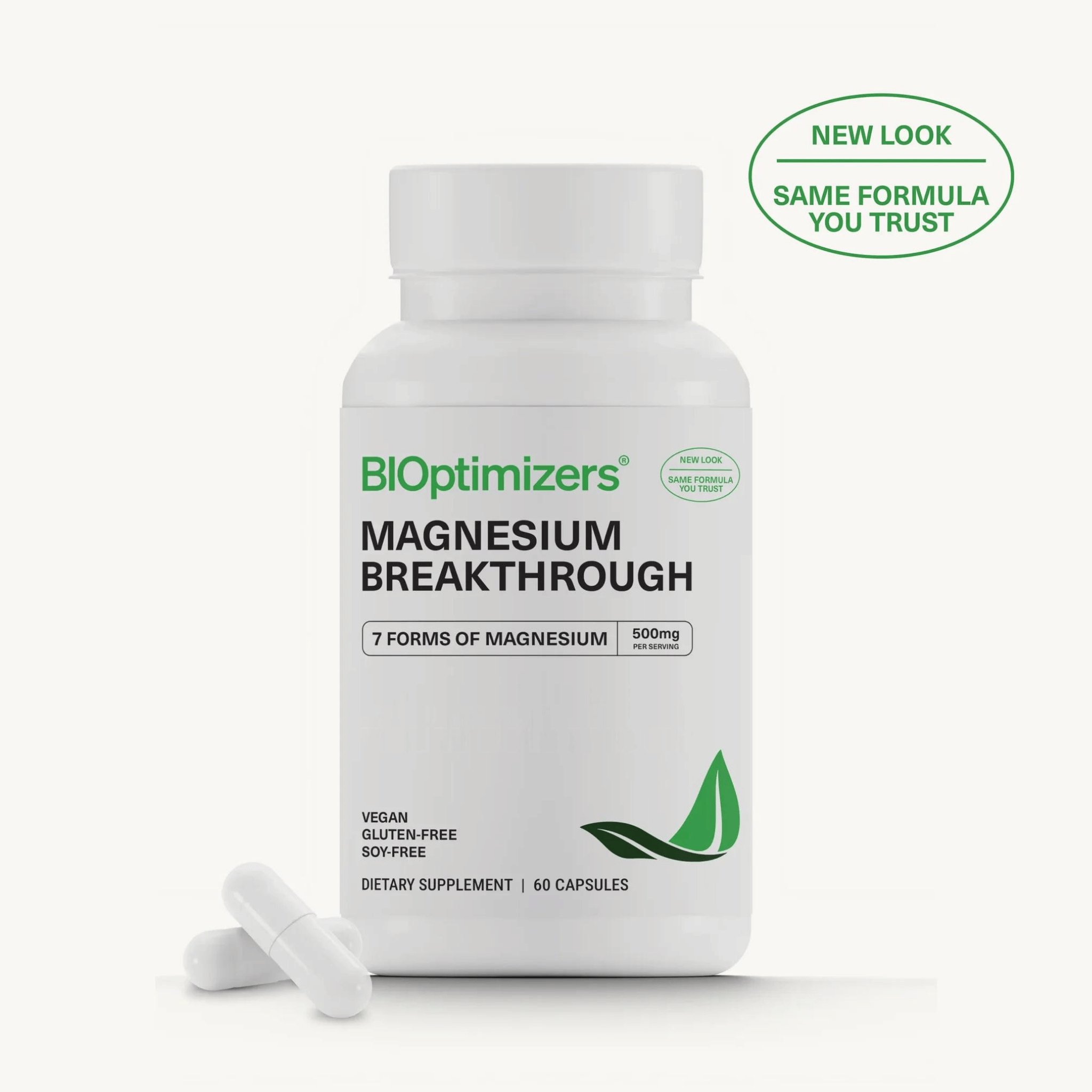
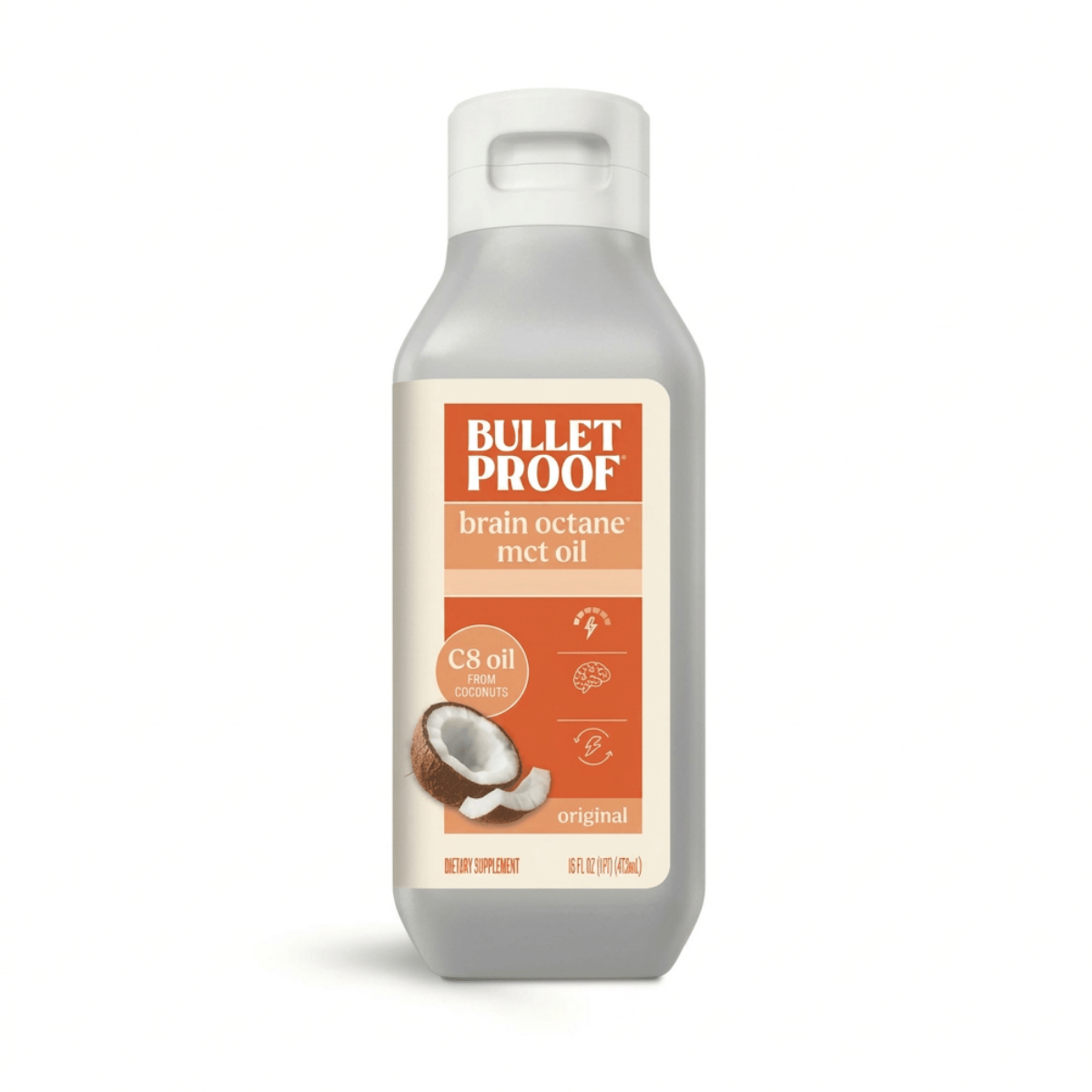
Bulletproof Brain Octane C8 MCT Oil 414mL | Pure C8 Coconut

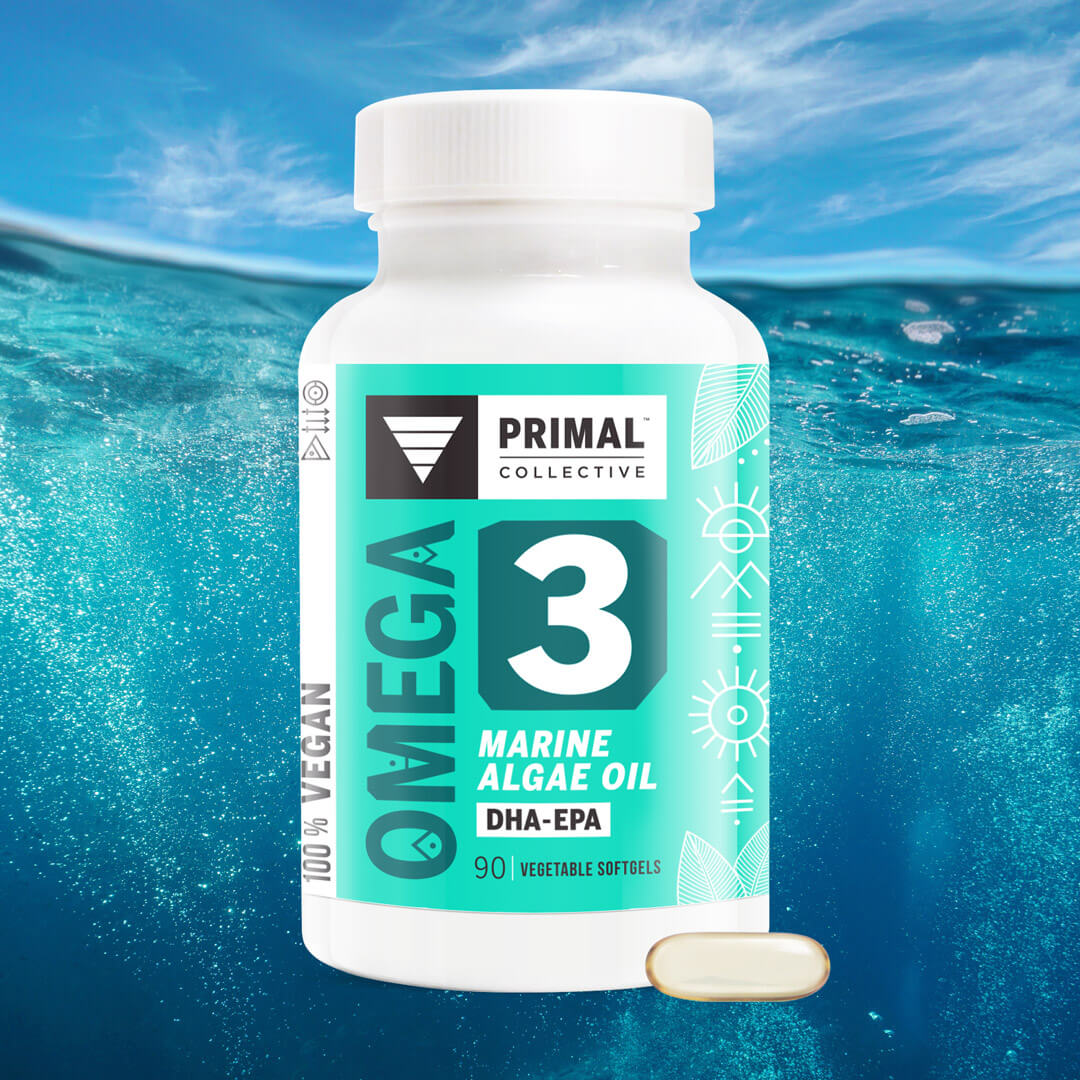
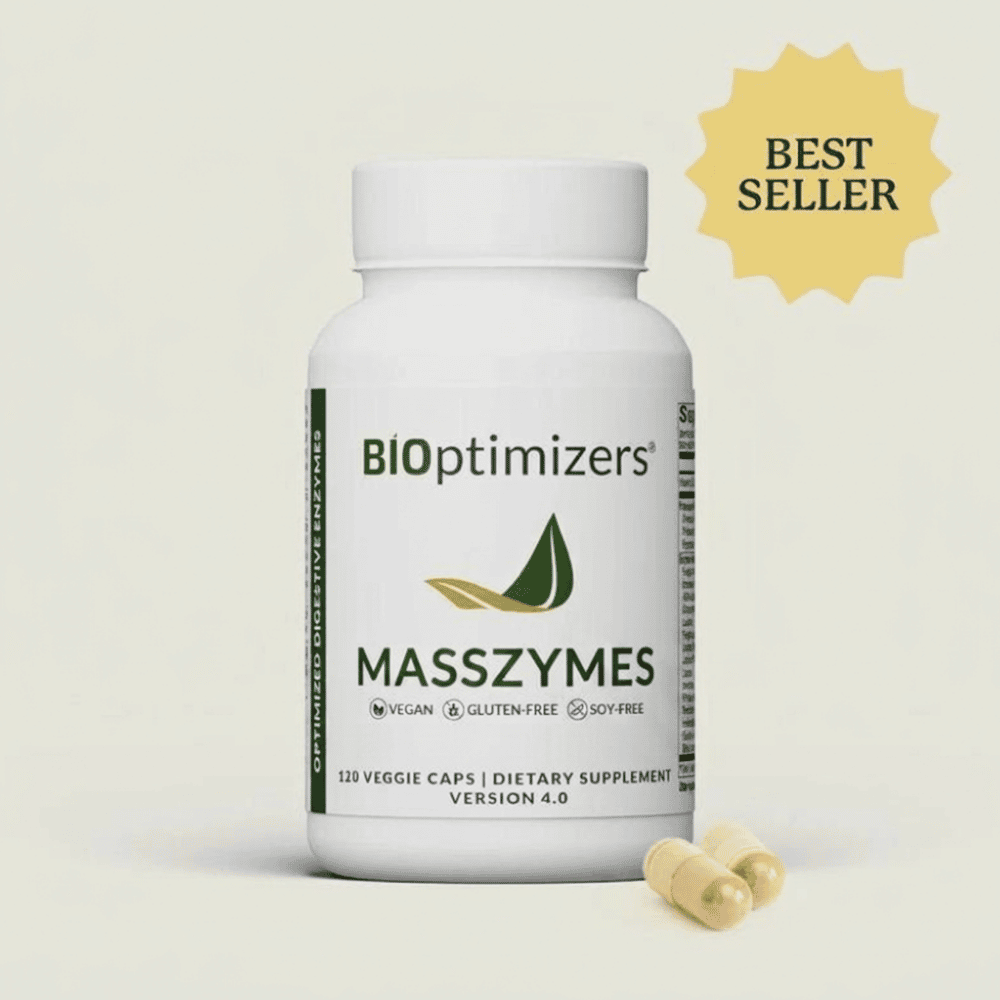
BiOptimizers MassZymes Australia


New Products
Pendulum 3 Strain GLP-1 Probiotic
Bioptimizers Sleep Breakthrough Drink Powder
BiOptimizers MassZymes Australia
KetoneAid KE4 Ketone Ester Drink
PureHMO® Prebiotic Powder Australia | Layer Origin 2'-FL
BIOptimizers Sleep Breakthrough - 60 capsules